The direction of causation has never been established in humans, and it is the single most important open question about this compound. Low MOTS-c in people with metabolic disease could mean the peptide is protective and its loss causes problems. 70% isopropyl alcohol prep pads, individually wrapped — for cleaning the vial stopper and injection site before MOTS-c dosing.
None of that is established in controlled data, it’s the same anecdote pile as the benefits, and it earns the same caution. The upside is that’s a temporary state with a date on it, this is a question about to get its first real answer, not one that already came back empty. That shows exercise produces MOTS-c in people — not that injecting MOTS-c reproduces exercise. That single experiment is where the “exercise mimetic” reputation comes from. We have no idea how many quietly tried MOTS-c (felt nothing), and never mentioned it again — so read “most people report energy” as “most people who post report energy,” which is a smaller, softer claim than it first looks. Their mechanisms and regulatory classifications also differ.
MOTS-c addresses the metabolic component specifically. In healthy young men, an acute bout of exercise on a stationary bike increased skeletal muscle MOTS-c levels by 11.9-fold. Young people have approximately 11% to 21% higher MOTS-c levels than middle-aged and elderly individuals. For those interested in performance-enhancing peptides, MOTS-c offers a unique mechanism. For context among fat burning peptides, MOTS-c operates through different mechanisms than compounds like AOD-9604 or visceral fat targeting peptides.
Combines with NAD+ and SS-31.
A common approach involves 4 to 6 weeks of treatment, followed by equal or longer periods off. However, some practitioners suggest morning injection to take advantage of potentially energizing effects and avoid any KLOW 80 peptide stimulation close to bedtime. A common reconstitution creates approximately 3.33 mg/mL concentration. Add bacteriostatic water slowly to the vial, directing the stream down the side rather than directly onto the powder.
A study testing its cognitive effects found zero impact on cognition when given peripherally, even at doses that improved physical capacity. MOTS-c activates brown fat thermogenesis through the same AMPK pathway responsible for its metabolic benefits, so some of that warmth may simply be the peptide doing exactly what it’s supposed to do. Animal studies have used doses up to 250 mg/kg without major problems, but that doesn’t guarantee human safety at any dose.
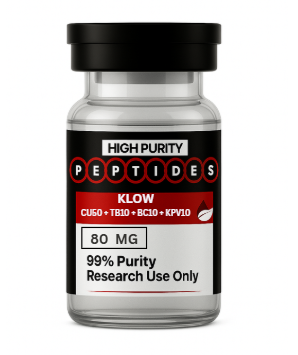
The real mechanism looks more layered than that. It’s common enough that it has a name in peptide communities, and it’s usually explained as a straightforward histamine or mast cell response. Most of these seem dose-dependent and more common when people dose in the evening. At the common dose of 5mg twice a week, one 10mg vial lasts about a week. A common setup is a 10mg vial with 0.5mL of bacteriostatic water, which gives 5mg per 25 units on a standard insulin syringe. Given how fast MOTS-c degrades, a flat result is a quality problem more often than it’s a real non-response.
Human data and its limits
This page is clinical education (not medical advice), and nothing here is a protocol or a recommendation to use MOTS-c. Combine an unvalidated dose with a product purchased as a “research chemical” of unverified identity, purity, and sterility, and the gap between online enthusiasm and responsible clinical practice becomes obvious. But in the real world, the most immediate concern is often not the molecule, it is the supply chain. There is not enough high-quality human safety data to make broad safety claims about MOTS-c — and that uncertainty itself is part of the clinical picture. Two realities make this category different from most of what patients encounter.
Most guides on MOTS-c peptide either bury the practical details under science jargon or skip the nuances that actually matter for people using it.
NAD+/MOTS-C/5-Amino-1MQ Blend Dosage
Both MOTS-c and SS-31 target mitochondrial function, but through different mechanisms. The common peptide mistakes guide covers errors that increase risk with any compound. It falls under Section 4.4 (Metabolic Modulators, specifically AMPK activators) on the prohibited list. Heart rate changes including elevated heart rate or palpitations have been reported by some users who purchase MOTS-c online. Understanding potential risks is essential for anyone researching MOTS-c.

Thoughtful consideration should be given to stacking MOTS-c with other peptides, even though many researchers have achieved success in this area. Research doses of MOTS-c show no evidence of causing permanent damage. Should side effects last more than four weeks, it may be necessary to reevaluate your dosing strategy and determine if MOTS-c is suitable for you. By the second or third week (common improvements can be noted in fatigue), GI problems, and energy levels. Assuming that your protocol is appropriate, fatigue usually dissipates within two to three weeks. Systematic adjustments to your protocol can often alleviate side effects while preserving the benefits when they arise.
Since its discovery in 2015 — MOTS-c has been the focus of peer-reviewed research studies. A peptide derived from mitochondria (MOTS-c activates AMPK), boosts glucose metabolism in skeletal muscles, enhances insulin sensitivity, and assists in mitochondrial function. The community’s reported milestones and clinical trial data detail what one can truly expect from a MOTS-c regimen. The primary mechanism of AMPK activation and metabolic reprogramming underlies the fat metabolic effects of MOTS-c, rather than direct lipolysis.
This specific binding is the reason the effects on glucose uptake are particularly focused on muscle tissue. Those who track numerical progress are the individuals who ultimately find satisfaction with it, unlike those who rely on mirror evaluations. The transformation is not evident in a single striking before-and-after image, which is why looking for MOTS-c transformation photos proves to be futile.